
![Participate Ulster County [background is a historic map of Ulster County]](https://ehq-production-us-california.imgix.net/559f54f49c44861568ba5424a5f49b87a9a90c62/original/1689352648/479c9a44e23e63e511fe5d3dcf413c61_participate_ulster_banner_image_%283%29.png?auto=compress%2Cformat)
Reimagining SUNY Ulster: Shaping Our Future Together
SUNY Ulster plays a vital role in strengthening our community and local economy by opening the door to quality, affordable post-secondary education and by preparing the skilled workforce that helps our region thrive. The Reimagining SUNY Ulster initiative is an opportunity to build on that strong foundation—ensuring the College continues to grow, adapt, and serve as a vibrant, valued community asset for generations to come.
County Executive Metzger has convened the Reimagining SUNY Ulster Committee in partnership with the College to take a thoughtful look at the College’s future and how its facilities can best support long-term success. The Committee has been charged with developing recommendations that align the College’s capital plans with its operational goals, ensure responsible stewardship of taxpayer dollars, and explore new opportunities to better serve students and the wider community.
As part of this effort, we're looking for your ideas on how both the Stone Ridge campus and the Kingston Center can evolve to better support the College, its students, and the broader community.
Background: Each year, SUNY Ulster updates its capital plan — a roadmap for maintaining and improving its buildings, grounds, facilities, infrastructure, and equipment. This plan guides the projects submitted annually for funding to Ulster County and New York State, which each provide 50% of approved capital funding. Careful planning ensures that every dollar invested strengthens the College’s ability to serve students and our community.
The Reimagining SUNY Ulster Committee focuses on physical campus needs and opportunities to make recommendations for the capital plan. The Committee’s scope does not include curriculum, programming, or staffing.
This Committee is being convened at a moment of opportunity for SUNY Ulster. Over time, our community and student population have evolved. Declining birth rates in Ulster County have reduced the number of traditional college-aged students attending classes on campus, while the College’s highly successful Collegian Program has expanded, bringing more college-level instruction directly into local high schools. At the same time, the College’s Strategic Plan recognizes growing opportunities to serve adult learners — students whose schedules, goals, and campus needs are often very different from those of recent high school graduates.
The 2025 Facilities Master Plan commissioned by the College and prepared by Liscum McCormack VanVoorhis Architects provides valuable data to guide this conversation:
On-campus instruction at the Stone Ridge campus has declined by more than 60% since 2009 — a trend that has continued even as overall enrollment increased in fall 2024.
The Stone Ridge campus includes approximately 220,000 net assignable square feet (NASF) of space. Based on SUNY’s methodology, only 88,758 NASF is required to meet current student and operational needs. Including redevelopment flexibility, the Master Plan suggests a target closer to 127,000 NASF.
SUNY Ulster also operates approximately 19,000 NASF at the Kingston Center.
These findings make clear that the County and the College must work together to thoughtfully align campus facilities with today’s realities and tomorrow’s possibilities. This collaboration is about being responsible stewards of taxpayer resources — and about imagining how our campuses can better serve students, support workforce development, and potentially offer new opportunities that benefit the broader community.
The Committee will review the 2025 Facilities Master Plan, the SUNY Ulster Strategic Plan, and any additional information it deems necessary. Materials considered at Committee meetings will be publicly available on the Participate Ulster page to ensure transparency and shared understanding.
Committee Schedule: The Committee will hold its first public meeting in early March and continue meeting through June, when it will present recommendations to the County Executive. The Committee may meet longer or reconvene as needed. Final recommendations will be shared with the County Executive, the College administration, and the Board of Trustees for consideration in future capital planning decisions.
Meeting Dates:
- Tuesday, March 17, 1 - 2:30 PM, SUNY Ulster College Lounge
- Tuesday, April 7, 1 - 2:30 PM, SUNY Ulster College Lounge
- Tuesday, April 21, 1 - 2:30 PM, SUNY Ulster College Lounge
- Friday, June 5, 1 - 2:30 PM, SUNY Ulster College Lounge
From the County:
Jamie Capuano (Committee Co-Chair) - Chief of Staff, Deputy County Executive
Amanda LaValle - Deputy County Executive
Sharon Williams - Director, Ulster County Office of Employment and Training
CJ Rioux - Ulster County Commissioner of Finance
Megan Sperry - Vice Chair, Ulster County Legislature, and Chair, Ulster County Economic Development, Planning, Education, Employment, Arts & Agriculture Committee
From the College:
Board of Trustees: Robert Jacobsen (Committee Co-Chair) - Board of Trustees Chair
Administration: Mark Longtoe - Vice President for Strategic Initiatives and General Counsel
Staff: Barbara Reer - Assistant Dean of Community Programs
Faculty: Candice VanDyke - Professor of English and Chief Diversity Officer
Foundation Board of Directors: Scott Davis - Secretary
From Town of Marbletown:
- Richard Parete - Town Supervisor
-
 SUNY Ulster Facilities Master Plan - June 6 2026 (4.98 MB) (pdf)
-
SUNY Ulster Facilities Master Plan - April 10 2026 (4.98 MB) (pdf)
-
SUNY Ulster Facilities Master Plan - May 1 2025.pdf (2.31 MB) (pdf)
-
SUNY Ulster Facilities Redevelopment Plan - April 18 2025.pdf (17.4 MB) (pdf)
-
SUNY Ulster Environmental Scan - April 15 2022.pdf (9.54 MB) (pdf)
-
SUNY Ulster Strategic Plan
-
Reimaging SUNY Ulster Committee Invitation from County Exec - January 9 2026.pdf (153 KB) (pdf)
-
Ulster County Comptroller Report on Community College Chargebacks - October 2024

-
June 5 2026 - Reimagining SUNY Ulster Committee Recommendations Presentation (3.29 MB) (pdf)
-
June 5 2026 - Reimagining SUNY Ulster Committee Recommendations Handout (120 KB) (pdf)
-
April 21 2026 - SUNY Ulster Capital Workshop (445 KB) (pdf)
-
April 7 2026 - SUNY Ulster Capital Planning Presentation (486 KB) (pdf)
-
March 17 2026 - Demographic and Socioeconomic Trends Presentations from Hudson Valley Pattern for Progress (2.49 MB) (pdf)

-
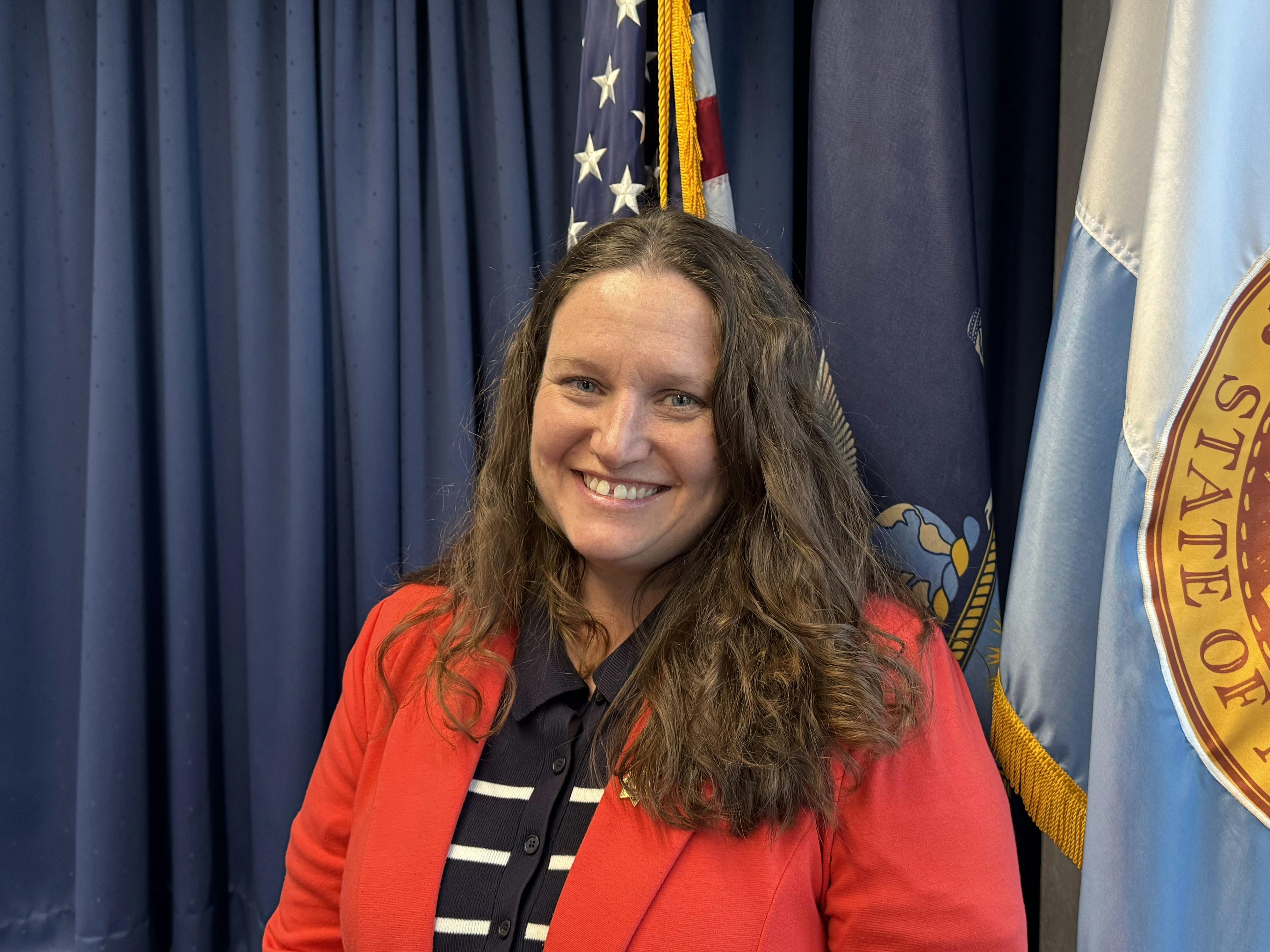
Committee Chair, Deputy County Executive
-
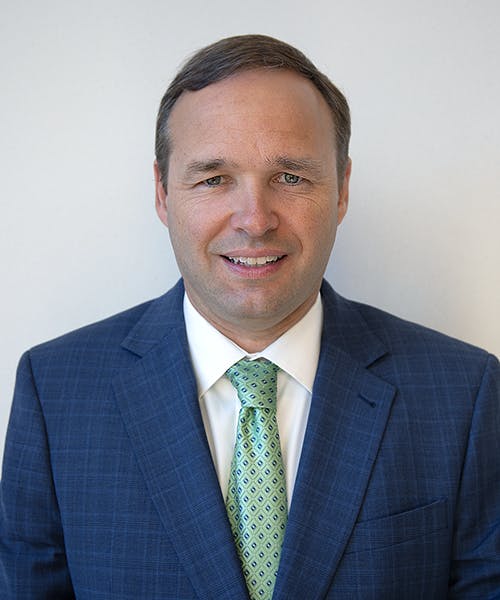
Committee Co-Chair, SUNY Ulster Board of Trustees Chair
As a graduate who began what became a 40+ year career in live performance production and entertainment it is disappointing the theatre and music program which once was so strong under Jack and Martee Lawson, Clay Crisp, and Dr. Olsen has disappeared. The theatre is a fitting complex which once housed productions year round to sold out audiences. The college was a destination. It could and should be resurrected as the performance centerpiece it once was.
As a 40 year resident of Ulster County and a retired professor of Ulster County Community College, I am happy that the County is working on the College's future, its buildings, and facilities in order to better serve our students and our community. We need to make the College a thriving community center. I find the College isolated and somewhat closed to the community. I make the following recommendations: Of course, access is #1. Right now, it's difficult for students and residents with limited transportation to get to the College. #2. serving our senior citizens. Many senior citizens are unaware that they can attend SUNY Ulster classes tuition-free. The College has good faculty and offers a variety of courses for all, not only young students. We have a large senior community in Ulster County. Our seniors can benefit by taking courses at Ulster to enrich their skills as well as to learn the latest issues in education. #3. The present facility needs a lot of renovations. Many of the areas are dated and need upgrades. #4. Work skill development and language learning for our large non-native English speakers as well as for the enrolled students to learn a second language, additionally to help employers and employees learn new advanced skills to enhance their performance in their present role or their career. A center with language learning and work force development for all needs to be implemented. #5. Creation of an agricultural curriculum for our community is vital. We need to support our farmers and help future farmers to stay in Ulster County. #6. We need a student union building that not only has a cafeteria but also a place for students to enhance student engagement, social interaction, advocacy, representation, hold cultural and diverse celebrations, networking as well as personal and professional development. #7. I don't support student dorms because as a former resident assistant in a small college, it's costly. By commuting to the college, students save money by living close to their families for support or living with their families. #8. Senior housing for retired educators can be created. These seniors can serve as mentors or tutors on campus. #9. A wellness center for all. Renovate the present gym, athletic field and the tennis courts. Having membership to the wellness center creates more revenue for the college and help our community stay healthy. With careful and creative planning, the College can become a vital center of activity in art, music, education, technology and wellness for our students and our residents.
My suggestion offers a potential direction for addressing the capital project by rethinking how existing campus spaces can be utilized. SUNY Ulster could explore partnerships with organizations such as Cornell Cooperative Extension, the Hudson Valley Farm Hub (NoVo Foundation), and potentially other SUNY institutions to integrate agriculture into the curriculum, even going as far as creating a full Agriculture Department.
Both interior and exterior campus spaces could be leveraged as hands-on learning environments, effectively transforming them into classrooms. This approach would open the door to a wide range of agricultural courses taught either on campus or in collaboration with local farms. Possible areas of study could include field crops, organic farming, precision agriculture, agribusiness, agritourism, food science and technology, hydroponics, and farm equipment mechanics.
The college could develop two-year degree programs in these areas or design coursework that prepares students for seamless transfer into four-year institutions. This model would not only expand academic offerings but also strengthen connections to the regional agricultural community while making innovative use of existing resources.
This concept could also extend to building dormitories to attract students from outside the area, paired with opportunities for internships and externships at the Farm HUB and maybe local farms like Davenports. It could also serve as a natural extension of the YMCA Farm Program, building on that foundation and continuing the education for the young people in the program who might choose Ag as a career.
I think it could be a distinctive and forward-looking program for SUNY Ulster, while strengthening ties to the region’s agricultural community.
Interesting fact: The average age of a farmer in the U.S. is just under 60, where as in Ulster County the average age is 40.
I believe that the Reimagining SUNY Ulster Committee should consider the development of a dedicated, flexible Conference and Workforce Innovation Center at the Stone Ridge campus. I am sharing this feedback as a community member and professional learning provider in the educational technology space. While my perspectives are informed by my work in the Educator Edge division at Ulster BOCES, I'm writing as an individual and not as an official spokesperson for the organization.
Currently, Ulster County lacks an economically feasible, purpose-built space for large-scale professional learning and educational conferences. While private industry hotels and more formal event spaces exist in the county, they are often cost-prohibitive for educational non-profits, educational organizations, and school districts, and their environments are typically better suited for private industry rather than educational or public interests. While Career Academies at iPark 87 is a solid facility for career and technical education, and there have already been several public-facing events that allow for informal networking and demonstration of the incredible work happening there, the spaces are purpose-built for specialized labs and equipment and thus aren't designed for the specific needs of a conference, such as varied breakout rooms, flexible dining, and large-scale vendor or mobile classroom demonstrations.
Per the master plan, the Stone Ridge campus currently has a space surplus of approximately 93,000 square feet. By repurposing a portion of this "unneeded" square footage for an event space, the College can create a premier hub for the region's educational and public interest groups to convene, demonstrate, and collaborate on solutions to some of the most significant needs of our time. Rather than maintaining underutilized classrooms, converting this space into a dedicated conference facility allows for the "right-sizing" of the campus while creating a high-value community asset that is still in line with the vision of SUNY Ulster as an educational and community hub.
This center would not be an all-purpose venue for private industry. Instead, it would serve as a flexible home for Ulster County government, local school districts, Ulster BOCES, and professional educational organizations, all of which currently struggle to find local spaces that are both functional and affordable to do the incredible work that neighboring regions are able to do. By designing a space specifically for this purpose, the College can simplify the facility rental process. Moving away from the current model of retrofitting academic spaces for one-off events would reduce administrative "red tape" and make the facility more economically accessible for our county's educational and government partners.
I didn't live around here until 1983, but appreciate the college and this initiative. I am not as aware of projects, but believe some of this reimmagining makes sense. I thought the idea of protecting the lands around the college for some sort of environmental science/ protections for the college would be beneficial. The woods adjacent to the school are supposedly habitats for many plant and animal species, plus they are impacted by adverse affects of invasive species. The property should be used for science and not develoed for parking, etc one would hour
These are some excellent ideas, really well thought out and most of all, ambitious! But speaking as a current student, the conversation feels like it’s skipping over the most basic, day‑to‑day barriers that “limit” access to the Stone Ridge campus.
The biggest hurdle is transportation. We can’t even get the U‑CAT schedule to line up with when classes actually start and end. That keeps the campus out of reach for students who don’t have cars and would prefer in‑person instruction. The buses arrive on campus right as class is ending and, trust me, they leave in no time, leaving many students stranded — sometimes for up to 3 hours during the day. I’ve raised this before at the college level and was told there are many hurdles, but that’s exactly the point: before we talk about building new hubs and centers, we should stop limiting access to the campus we already have.
Students also constantly talk about how the physical environment feels. Some classrooms feel oppressive and the temperature swings wildly depending on the wing you’re in. It’s a running joke between students and faculty alike. Fixing the basics — heating, cooling, lighting, airflow — would make a bigger difference to student experience than any new construction mentioned. Also, a coat of paint wouldn’t hurt anyone.
The campus aesthetic matters too. The soccer field looks neglected, yet barely used. The gardens that do exist go unnoticed. I only know because we did an Environmental Science class there. A little intentional landscaping, some flowers, really just giving the maintenance staff something to actually upkeep would go a long way toward making the campus feel alive instead of a place one is sentenced to be until they get the chance to go somewhere better.
Finally, the cafeteria. The staff is amazing, but there is only so much they can do with the “food” they are given. Are you all familiar with gas station food? No — that’s not even accurate. Some gas stations do it better. The space itself is also in poor condition. Improving the food and the environment would immediately change how students feel about being on campus.
If we focused on improving what we already have — transportation access, classroom conditions, campus appearance, and food quality — and then showcased those improvements online, in those glossy pamphlets, and on the U‑CAT buses that don’t actually service our campus in a meaningful way, SUNY Ulster could shift from feeling like a last‑resort option to a place people genuinely want to be. And that type of positive experience can become a tradition, carrying on across generations. I have more ideas on how to fix up what we already have, but you get the point…
I am a life-long resident, SUCCC alumni, County Caseworker for CPS-Preventive, veteran, YMCA member, and River of Life Church member. THIS IS (my plan for) WHAT WE SHOULD DO:
(93,000 NASF)
1. Transitional Housing Hub (22,000 sq ft) — Converted dorm/office wings into 18–24 month transitional units with on-site case management. Not emergency shelter — a stable bridge. Residents are directly connected to the workforce training program next door.
2. Social Services Relief Center (18,000 sq ft) — Shared office suites for city/county agencies, a mental health clinic, and a BSW/MSW practicum hub. This relieves caseload pressure on overworked social workers and trains the next generation simultaneously.
3. Workforce Training Center (28,000 sq ft) — The engine of the plan. Short-cycle certificates (6–12 weeks), employer-in-residence recruiting, evening resume labs, and childcare co-ops to remove barriers. Directly feeds employment outcomes for housing residents and community members alike.
4. Community Education Annex (18,000 sq ft) — Evening and weekend GED, ESL, digital literacy, and dual enrollment programs — opening the campus to the broader community without touching daytime academics.
***What makes this work as a system: each population serves the others. Housing residents get job training access. Job trainees get social work supports. Social work students get real practicum hours. Adult learners get a pathway into credit programs. The campus becomes a neighborhood institution, not just a building.
Financial Resources:
HUD - CoC funding toward transitional housing
WIOA - is stable and is solid ground to stand on.
Workforce Pell - goes live July 1, 2026. meaning students in the 6–12 week certificate programs can receive federal financial aid which we all know lowers the subsidy burden on the college.
CDBG - remains funded and can be a powerful resource for the city/county partnership.
PLEASE consider this. It is absolutely build-upon-able and a good foundation.
I attended SUNY Ulster 45 years ago, and have known many people who have benefitted from it's programs since then. I think it's important to keep significant elements of the core campus in good shape, the library, the gymnasium, some food service, the auditorium and athletic fields, in addition to classroom space. For many students, this is the closest thing to a real college experience they will ever have. For others, it provides a chance for students who didn't immediately excel in high school to continue higher education and transfer to a four year college when they are ready. Online and satellite options are wonderful but don't replace having a central college community. My experience in this life is that once certain things are gone, there's no going back. It would be almost impossible to reconstruct this in the future. For example, if the people before us didn't have the foresight and will to build libraries, we surely wouldn't be building them now in our current economic and social climate. Places for learning and community where the general public is welcome in real life are precious. I'm not saying we shouldn't, change, modify and grow, just that we should be very mindful of values that don't always appear on a budgeting balance sheet.